

The Ultimate Guide to Sofa Longevity: Why Solid Wood Frames Outlast Engineered Alternatives
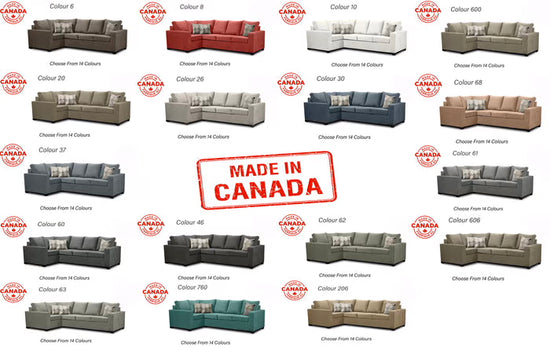
When you walk into a showroom or browse online at furnwarehouse.ca, your eyes are naturally drawn to the velvet textures, the deep navy blues, or the sleek lines of a modern sectional. But at Furniture Warehouse Brampton, we know a secret that most big-box retailers hope you never discover: The most important part of your sofa is the part you can’t see.
The frame is the soul of your furniture. It dictates whether your investment will last twenty years or twenty months. In this guide, we’re pulling back the fabric to show you why kiln-dried solid wood—specifically the Canadian birch and maple we use in our Brampton factory—is the only choice for a high-traffic home.
The Anatomy of a Furniture Frame
To understand why solid wood is superior, we first have to look at what it’s competing against. Most modern furniture is built using one of four materials:
Solid Hardwood (The Gold Standard)
Furniture-Grade Plywood
OSB (Oriented Strand Board)
Particle Board or MDF (The Budget Tier)
1.1 What Defines "Solid Wood"?
At Furniture Warehouse Brampton, when we talk about solid wood, we aren't talking about "wood products." We are talking about timber harvested from slow-growing deciduous trees. Unlike softwoods (like pine or cedar), hardwoods like Birch and Maple have a much higher density. This density means the fibers are packed tightly together, making the wood incredibly heavy, durable, and resistant to snapping under pressure.
1.2 The Magic of Kiln-Drying
Raw wood contains moisture. If you build a sofa with "green" wood, it will eventually dry out in the climate-controlled environment of your living room. As it dries, it shrinks, twists, and warps. This is what causes that annoying "creaking" sound when you sit down.
We ensure every piece of lumber used for our custom collections is kiln-dried. This process involves heating the wood in a massive oven to a precise temperature, reducing moisture content to about 6-8%. This "locks" the wood’s dimensions, ensuring your sofa stays as square and silent as the day it left our Brampton factory.
The Hidden Dangers of Engineered Wood (MDF & Particle Board)
If you’ve ever bought a piece of "flat-pack" furniture that felt wobbly after six months, you’ve experienced the failure of engineered wood.
2.1 The "Glue and Dust" Problem
Particle board and MDF are essentially sawdust and wood shavings held together by resin and wax. While they are cheap and easy to mass-produce, they have zero structural "grain."
Fastener Failure:
Because there is no grain, screws and staples have nothing to "bite" into. Over time, the weight of people sitting down causes the fasteners to strip the holes, leading to a frame that literally falls apart from the inside out.
Moisture Sensitivity:
These materials act like a sponge. If you live in a humid climate or have a minor spill that seeps through the upholstery, engineered wood can swell and crumble. Once it swells, it can never be repaired.
2.2 Why Big Box Stores Love It
Mass retailers prioritize shipping weight and cost. Engineered wood is lighter and cheaper to manufacture. At Furniture Warehouse, we take the opposite approach. We believe a sofa should be heavy—because weight usually equals density, and density equals decades of use.
Technical Joinery – How We Put it Together
A frame is only as strong as its weakest joint. You could have the best wood in the world, but if you only use glue and a few nails, it will fail.
3.1 Double-Doweled Construction
In our Brampton manufacturing facility, we utilize double-doweled joints. This involves drilling two holes into both pieces of wood and inserting thick wooden pegs (dowels) coated in high-strength wood glue. This creates a mechanical bond that is actually stronger than the wood itself.
3.2 The Power of Corner Blocks
If you flip over a Furniture Warehouse sofa, you’ll see heavy-duty wooden blocks screwed into every corner of the frame. These are Corner Blocks. They serve two purposes:
Anti-Racking: They prevent the sofa from leaning or "racking" diagonally.
Leg Support: They provide a massive, solid foundation for the sofa legs to screw into, ensuring the legs never snap off if the sofa is dragged across the floor.
Canadian Birch/Maple vs. Imported Softwoods
Living in Ontario, we have access to some of the best timber in the world. Many imported sofas use "Yellow Pine" or "Fir." While these are technically solid woods, they are softwoods.
The Staple Test:
Softwoods are porous. Over time, the heavy-duty staples used to hold your zig-zag springs in place will pull out of soft wood like pine.
The Birch Advantage: Canadian Birch is notoriously tough. It holds staples with a "death grip," meaning your seat springs stay under tension for 15-20 years without sagging. This is why local manufacturing at Furniture Warehouse Brampton is a functional advantage, not just a matter of pride.
The Economics of Quality (Value Over Time)
Let’s do the math that most furniture stores don’t want you to see.
Feature The "Budget" Sofa Furniture Warehouse Sofa
Frame Material Particle Board / OSB Kiln-Dried Solid Birch/Maple
Expected Lifespan 2–4 Years 15–25 Years
Retail Price $899 $2,499
$225–$450 $100–$166
The "cheap" sofa is actually more expensive. When you shop at furnwarehouse.ca, you are paying for the engineering that keeps that sofa out of a landfill and in your living room for the next two decades.
Chapter 6: How to Spot a High-Quality Frame in a Showroom
If you aren't shopping at our Brampton location and find yourself elsewhere, use these three tests to see if the frame is solid wood:
The Lift Test: Pick up one front corner of the sofa. If the other front leg stays on the ground while the frame twists, it’s a weak, engineered frame. If the whole side lifts uniformly, it’s a rigid, solid wood frame.
The Squeeze Test:
Firmly squeeze the arms and back of the sofa. If you can feel the wood bending or "giving" under your hand, it’s likely thin plywood or OSB.
The Weight Test:
High-quality hardwood is heavy. If you can slide a large 3-seater sofa across the floor with one finger, it likely lacks the density required for long-term durability.
Chapter 7: Sustainability and the "Re-Upholstery" Factor
We live in a "throwaway" culture, but furniture shouldn't be part of it. A solid wood frame from Furniture Warehouse Brampton is a legacy piece.
Because the frame is so durable, it can be reupholstered two or three times over its life. In 10 years, if you want a new color or fabric, you don't need to buy a new sofa. You simply bring the frame back to life with new fabric. You can't do that with particle board; the frame wouldn't survive the process of removing the old staples.
Frequently Asked Questions (FAQ)
Is plywood ever okay for a sofa frame?
Yes, but only if it is 13-ply furniture-grade hardwood plywood. However, even the best plywood cannot match the screw-holding power of solid kiln-dried birch. At Furniture Warehouse, we stick to solid timber for our primary load-bearing rails.
Why is kiln-drying so important in Ontario?
Ontario has massive humidity swings between our humid summers and dry, heater-driven winters. Without kiln-drying, wood frames in Brampton homes would expand and contract so much that the joints would eventually "pop" or loosen.
Can I customize the wood type?
While we primarily use Birch and Maple for their superior strength-to-weight ratio, we can discuss specific needs for your custom build. Check out our customization options here.
Conclusion: Don't Compromise on the Foundation
Your home is your sanctuary, and your sofa is the centerpiece of your family life. Whether it’s movie night, a nap, or kids jumping around, your furniture takes a beating. Choosing a solid wood frame from Furniture Warehouse Brampton ensures that your sanctuary is built on a foundation that won't let you down.
Ready to see the difference for yourself? Visit our showroom or browse our latest Canadian-made collections at www.furnwarehouse.ca. Invest in quality today, and you won't have to shop for a replacement tomorrow.